Most agriculture NGOs in Rwanda pick one lane: income generation or food security. Dream Village Rwanda, a government-recognized, youth-led organization, built its agriculture program to do both at once, and to do it as a closed loop that feeds directly back into the young people the organization already serves clinically through its health program.
This is what a modern agriculture NGO Rwanda program looks like when it is designed around youth-led entrepreneurship and vulnerable-population nutrition at the same time.
Why Rwanda Needs Agriculture NGOs That Think Beyond the Harvest
Agriculture accounts for roughly a quarter to a third of Rwanda’s GDP and remains the country’s largest source of employment, yet youth participation in commercial farming still lags behind the sector’s economic weight. Most young Rwandans see agriculture as subsistence work, not a business. At the same time, vulnerable populations, including young people living with HIV who require consistent nutrition to support treatment adherence, often fall outside the reach of commercial farming programs entirely.
Dream Village’s agriculture program was built to close both gaps in a single model: youth agribusiness training paired with a direct nutrition pipeline for the organization’s own health program beneficiaries.
The Moringa Project: Dream Village’s Primary Revenue Engine
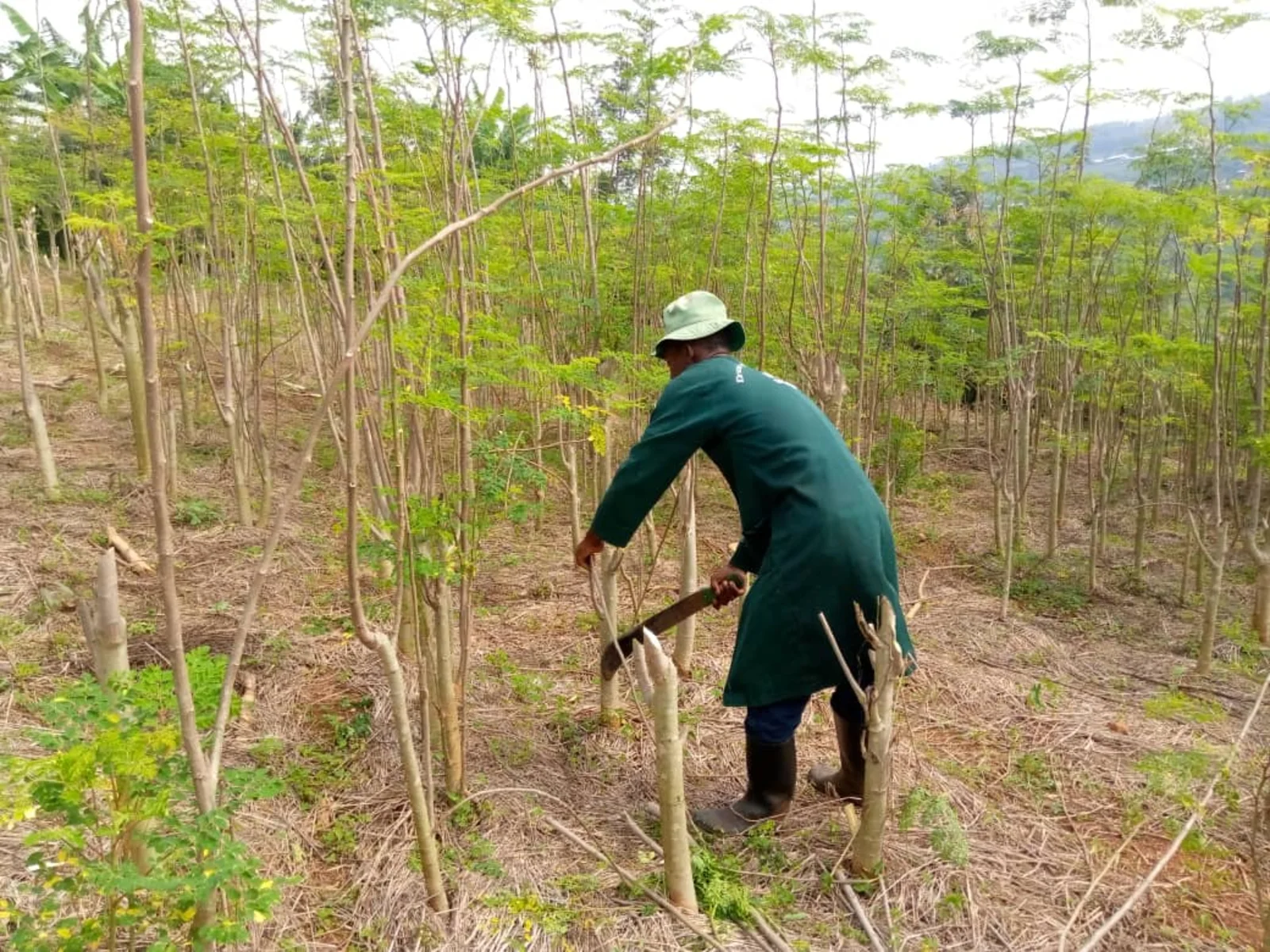
Moringa production is the flagship of Dream Village’s agriculture pillar, and the clearest example of what a self-sustaining agriculture NGO Rwanda model can look like. Key figures:
- 500kg of moringa produced per season currently
- 1,000kg per season target, doubling current output
- Three product lines: moringa powder, tea, and oil
- Two sales models: direct branded retail through supermarkets, coffee shops, and herbal shops, and bulk supply for buyers who rebrand under their own labels at a premium margin
This dual sales model is deliberate. Branded retail builds Dream Village’s own market presence, while bulk supply generates faster revenue with lower marketing overhead. Together they are the mechanism the organization is using to reduce its near-total dependence on grant funding, a gap explicitly identified in its own internal readiness assessment.
Vegetables, Beans, Maize, and Soya: The Nutrition Security Engine
Not every crop Dream Village grows is meant to be sold. Beans, maize, and soya are produced specifically for distribution, not commercial sale, and this is where the agriculture program connects directly to the organization’s HIV care work:
- 120+ vulnerable young people living with HIV who experience malnutrition receive maize flour and beans
- Single mothers supported by Dream Village also receive distributions
- Distribution happens at least twice per year, aligned with harvest seasons
- Vegetable production at the Vocational Training Center (VTC) supports both local market sales and nutrition distribution, though it has not yet reached contract-farming scale
This is a closed-loop model in the fullest sense: Dream Village grows the food, and channels it directly to the same young people its CATS peer supporters are already following clinically for HIV treatment adherence. Nutrition security reinforces viral suppression outcomes rather than operating as a separate, disconnected program.
Beyond the Fields: Agroforestry, Agribusiness Training, and the VTC
Dream Village’s agriculture program extends past any single crop:
- Agroforestry and organic farming practices protect soil health and long-term land productivity
- Youth agribusiness training builds commercial skills, not just planting skills, positioning graduates for income generation rather than subsistence farming alone
- The Vocational Training Center (VTC) functions as a multi-crop production facility and training ground where young people learn processing, packaging, and small-business operations alongside cultivation
This combination, cultivation skills plus commercial skills, is what separates a youth agribusiness pipeline from a typical community garden project.
Why This Model Matters for Rwanda’s Agriculture Sector
An agriculture NGO Rwanda program earns durability when it aligns with national priorities. Dream Village’s agriculture pillar supports Rwanda’s Vision 2050 and National Strategic Plan goals around youth employment, nutrition security, and agricultural value addition, while giving young people, many of whom are already engaged through Dream Village’s health and empowerment programs, a tangible pathway to income that does not depend on migration to Kigali or informal labor.
The organization’s own stated goal is explicit: “by increasing production and sales, the project will be better positioned to meet its financial needs without relying solely on external support.” Moringa is the primary vehicle for that self-sustainability target, and the nutrition-distribution side ensures growth in sales never comes at the cost of the vulnerable young people the program was built to serve first.
Partner With Rwanda’s Youth-Led Agriculture Model
Dream Village’s agriculture program proves that an agriculture NGO Rwanda initiative can generate real commercial revenue while still prioritizing the nutrition security of its most vulnerable beneficiaries. With moringa production on track toward 1,000kg per season and a nutrition pipeline already reaching 120+ vulnerable young people twice yearly, the next phase is scale, more production capacity, expanded vegetable contracts, and stronger agroforestry systems.
Learn more: Agriculture Program
Follow the movement: Instagram @dreamvillage3 | LinkedIn: @dream-village-rwanda
Partner with us: Contact us at +250 (0) 788 266041
Share this story: every share helps connect Dream Village’s agriculture program to buyers, funders, and partners